Training
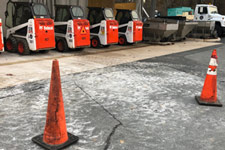
FM-OHS provides a wide range of health and safety training options to help sustain a healthful and safe working and learning environment. These training courses are offered not only to meet numerous regulations, but also toward an effort to encourage health and safety throughout the entire university community.
See below for training guidelines, our full list of courses, and our training FAQs for helpful information.
See your group's training records
- Training Records prior to 2024: This Tableau report is accessible by anyone with Tableau access: FM management and management staff.
- Training Records from January 1, 2024 to present can be found via Workday: Class info is added 5-7 days after a training is completed.
Course enrollment & guidelines
Course enrollment
- Course enrollment must be initiated through the Workday Learning Management System (LMS)
- Workday
- Search for the course in the Workday search bar (top center), select the course, & select the offering. Helpful tip: all FM OHS approved course names start with “FM” and are accompanied by the OHS logo for easy identification. Ex: Search “FM Confined Space Entry”.
Watch these quick videos on how to enroll in Workday LMS courses
Coming soon.
Request a course not listed
If you would like to request a training course not listed below, please fill out the Training Request Form and submit it to fm-ohs@virginia.edu.
Helpful hints and expectations for supervisors
- Check your employees' learning records in the Workday LMS. Does everyone have what they need? Is everyone up to date?
- Know what training is required for your employees' job responsibilities and job compliance. Refer to the list of courses below for guidance. If you don't see a course below that is needed for your employees, email fm-ohs@virginia.edu to request the training needed. Sometimes special circumstances arise and OHS can help with those situations. OHS can also provide training for all FM shifts.
- Know that OHS is available to review and assess your training needs, answer questions, and provide guidance. Email fm-ohs@virginia.edu with any questions.
- Supervisors are responsible for their team's training responsibilities and commitment to training assignments. Please allow your employees time to complete their training assignments at work.
- Supervisors should be familiar with accessing Zoom, Teams, and the Workday LMS, and they should assist employees who may not be familiar with the technology, access, and navigation on these platforms.
- Supervisors should always provide access and adequate time, space, and equipment, so employees are able to participate in their assigned training sessions.
- Make sure you or your employees communicate their attendance issues well ahead of an in-person class; and make sure employees are attending their assigned sessions prior to expiration.
- Make sure your team completes digital assignments in the Workday LMS prior to expiration.
Helpful hints & expectations for employees
- Self-enroll in all required Workday Learning training for your job responsibilities.
- Know what training is required for your job responsibilities and job compliance. Contact your supervisor for guidance.
- Arrive 5 minutes early to class
- Late arrivals will be turned away
- Come prepared w/PPE, equipment, etc.
- Bring your own snacks, drinks, and food
- Sign-in and sign-out or you won't get credit for attending
- Dress appropriately for outdoor sessions (warm clothes, breathable clothes, sunscreen, hydration)
- Need transportation? Contact the FM On-Demand Shuttle Service @ 434-987-5012
Attendance policy
- All FM-OHS training courses are provided to Facilities Management employees at no charge.
- Supervisors will be notified of an employee's missed attendance in assigned training sessions.
- Missing an assigned training will result in the inability of the employee to perform the work; and if an employee performs work for which they have not been trained or re-certified, they will be subject to disciplinary action.
Pre-requisites & class pairings
Understand the pre-requisite and/or the class pairing requirements
- See list of training courses and their course descriptions to see pre-requisites and class pairings
- Pre-requisite/class pairing courses must be completed prior to enrollment in desired courses.
- Enroll in pre-requisites through the Workday Learning Management System (LMS).
- Search for the course in the Workday search bar (top center), select the course, & select the offering. Helpful tip: all FM OHS approved course names start with “FM” and are accompanied by the OHS logo for easy identification. Ex: Search “FM Confined Space Entry”.
Training courses
Asbestos - Class IV Asbestos Awareness (2 Hours)
All housekeeping and custodial staff as well as all Facilities Management tradespersons are required to receive asbestos awareness within the first year of employment. This classroom awareness course will cover information available concerning asbestos containing material (ACM) in University buildings including instruction on how to recognize damaged ACM, engineering controls and work practices, procedures to prevent exposure, building signage, and warning labels. Trainees will receive information on the health effects of asbestos exposure, a brief regulatory overview, and a review of the University's asbestos management policy. This Class IV training does not qualify the attendee to handle or disturb asbestos.
*Pre-requisite/class pairing: None
*Recertification: Annually (10-minute online refresher course)
Asbestos - Class IV Asbestos Awareness Refresher
All employees who completed the Asbestos - Class IV Asbestos Awareness Refresher course are required to complete this online refresher course; and will receive a brief overview of all components covered in the initial Class IV awareness training.
*Pre-requisite/class pairing: Asbestos - Class IV Asbestos Awareness (2 Hours)
*Recertification: Annually
Bloodborne Pathogens (BBP)
All employees who may come in contact with blood or other potentially infectious material during the course of their work are required to receive training prior to potential exposure. Instruction is provided on risks associated with bloodborne pathogens as well as proper handling procedures for blood and other potentially infectious materials. This course includes individual hands-on training with specific instruction for blood cleanup. Trainees must show competence and achieve a passing grade on the course evaluation.
*Pre-requisite/class pairing: None
*Recertification: Annually
Bloodborne Pathogens (BBP) Refresher (digital)
All employees who completed the Bloodborne Pathogens (BBP) course are required to complete this digital refresher course. Employees will receive a brief overview of all components covered in the initial Bloodborne Pathogens (BBP) training.
*Pre-requisite/class pairing: Bloodborne Pathogens (BBP)
*Recertification: Annually
Bobcat/Skidsteer
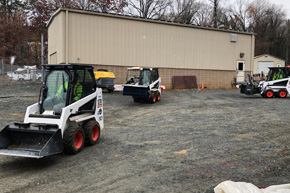
All employees who will operate a Bobcat/Skidsteer powered industrial truck are required to receive training prior to operation. This hands-on training provides instruction on how to inspect, operate, use equipment attachments, and maneuver a bobcat/skid steer and covers hazards specific to snow removal operations. Training is required for all employees who use a Bobcat/Skidsteer regardless of the frequency of or area in which it is used. Trainees must show competence and achieve a passing grade on the course evaluation.
*Pre-requisite/class pairing: None
*3 Years + Required when new hazards are introduced, procedures are changed, or deficiencies in safe work operations have occurred.
Confined Space Entry
All employees expected to enter a confined space must receive Confined Space Entry training. This training will teach the definition and identification of a confined space, the hazards associated with work in the spaces, and the proper methods required to work safely. It will also cover the criteria that raise a confined space to Permit-Required Confined Space status. Trainees must show competence and achieve a passing grade on the course evaluation.
*Pre-requisite/class pairing: Fall Prevention and Protection
*Recertification: Required when new hazards are introduced, procedures are changed, or deficiencies in safe work operations have occurred.
Electrical Safety NFPA 70E
All employees who will perform work on or around electrically energized equipment, be required to de-energize equipment in order to perform electrical work, and/or will be exposed to the risk of electrical shock are required to take this course. This training focuses on the hazards of electricity, including components specific to arc flash hazards as well as how to identify and prevent possible accidents and/or injuries. Additional safe work practices are covered including the lockout/tagout (LOTO) process and use of proper PPE. Trainees must show competence and achieve a passing grade on the course evaluation.
*Pre-requisite/class pairing: First Aid/CPR/AED, Bloodborne Pathogens (BBP)
*Recertification: 3 years + Required when new hazards are introduced, procedures are changed, or deficiencies in safe work operations have occurred.
Excavation Competent Person
All employees who will be responsible for demonstrating proper inspection and knowledge necessary to fill the role of competent person; and employees who will be working in or around trenches and excavations greater than five feet are required to take this course. This competent person course will teach you how to recognize the potential hazards and employ the proper protective measures. This course will meet the competent person definition in the regulations. Each FM shop that is exposed to trenches and excavations must have at least one person trained to the competent person level. This course is offered annually or upon request. Trainees must show competence and achieve a passing grade on the course evaluation.
*Pre-requisite/class pairing: None
*Recertification: Required when new hazards are introduced, procedures are changed, or deficiencies in safe work operations have occurred.
Fall Prevention and Protection
All employees who will be required to don a harness are required to take this course. This classroom and hands-on training course will teach trainees how to recognize possible fall hazards and falling-object hazards, when methods and plans are needed, and the methods and tools to reduce or eliminate fall hazards. Employees will be taught the difference between fall arrest and fall restraint protective equipment and when to use each type of protective equipment. Trainees must show competence and achieve a passing grade on the course evaluation.
*Pre-requisite/class pairing: None
*Recertification: Required when new hazards are introduced, procedures are changed, or deficiencies in safe work operations have occurred.
Fall Prevention & Protection Competent Person
All employees who have been identified and will be required to perform as a 'Competent Person' as defined in the UVA FM Fall Protection Program, must complete this course. A Competent Person is one who can identify and predict hazards and has the authority to take corrective action. Attendees learn to select, inspect, and oversee fall protection systems; recognize unsafe practices; and take prompt corrective action to reduce risk and maintain compliance with safety standards. The course emphasizes practical decision-making, hazard recognition, and accountability to help create safer work environments. Trainees must show competence and achieve a passing grade on the course evaluation.
*Pre-requisite/class pairing: Fall Prevention and Protection
*Recertification: Required when new hazards are introduced, procedures are changed, or deficiencies in safe work operations have occurred.
Fire Extinguisher & Fire Watch
All employees expected to sound the alarm and alert firefighters and building occupants if there is an emergency must receive Fire Extinguisher & Fire Watch training. This training will teach employees to look for observable signs of smoke, fire, and hazardous conditions, prevent a fire from occurring and extinguishing small fires, and to focus on the primary role of alerting professionals and protecting the public. This course will also familiarize employees with the general principles of fire extinguisher use. Trainees must show competence and achieve a passing grade on the course evaluation.
*Pre-requisite/class pairing: None
*Recertification: Annually
First Aid/CPR/AED
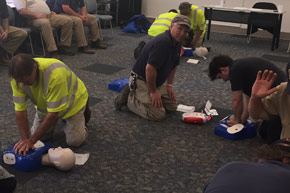
Some employees based on their job role and responsibilities are required to have first aid training. This classroom and hands-on training course will teach trainees how to provide CPR as well as first aid. The course will also instruct employees on how to respond to shock and heart conditions. A certification card will be issued to each trainee who shows competence and achieves a passing grade on the course evaluation.
*Pre-requisite/class pairing: Bloodborne Pathogens (BBP)
*Recertification: 2 years
Forklift Operator (New Operator)
All employees who will operate a forklift are required to receive training prior to operation. This online and practical hands-on course cover inspection and safe operation of forklifts. This course will teach employees the operational differences between a car and a forklift, power sources, capabilities, stability, and carbon monoxide hazards while operating propane or diesel trucks inside buildings. An online evaluation is required to pass the online course.
*Pre-requisite/class pairing: Online course must be completed prior to the practical hands-on training
*Recertification: 3 years
Forklift Operator (Recertification)
All employees who hold a forklift license are required to take this hands-on course to update and review trainees' knowledge of inspections, stability, and safe operation of forklifts. Individual driving tests will be held. An operator's license will be issued to each trainee who shows competence and achieves a passing grade on the practical hands-on evaluation.
*Pre-requisite/class pairing: Forklift New Operator online course & practical hands-on training
*Recertification: 3 years
Hearing Conservation
All employees in the Hearing Conservation Program are required to receive this training. This course covers noise levels, hearing hazards, and recommendations on how to prevent hearing loss. It will cover the effects of noise; the purpose, advantages, and disadvantages of various types of hearing protectors; the selection fit, and care of protectors; and the purpose and procedures of audiometric testing.
*Pre-requisite/class pairing: None
*Recertification: Annually
Hearing Conservation Refresher
All employees in the Hearing Conservation Program are required to receive this refresher training. This course covers noise levels, hearing hazards, and recommendations on how to prevent hearing loss. It will cover the effects of noise; the purpose, advantages, and disadvantages of various types of hearing protectors; the selection fit, and care of protectors; and the purpose and procedures of audiometric testing.
*Pre-requisite/class pairing: Hearing Conservation
*Recertification: Annually
Hearing Conservation Mobile Audiometric Testing
All employees in the Hearing Conservation Program are required to receive audiometric testing to monitor hearing ability where employees are exposed to loud noise. Annual testing is used to detect early signs of noise-induced hearing loss to monitor changes over time. Testing includes listening for tones at various frequencies and volumes. Results identify the standard threshold shift (STS) and if medical follow-up is needed.
*Pre-requisite/class pairing: None
*Recertification: Annually
Hoist & Rigging
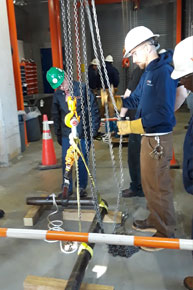
All employees who will be expected to operate hoist and rigging equipment are required to receive proper training prior to operation. This one-day classroom and hands-on course will cover general requirements for proper rigging, how and why proper rigging practices improve safety, as well as review rigging requirements for steel chains, wire rope, metal mesh, and synthetic fiber slings. Hoist operation will be covered. Mobile cranes awareness will also be covered in this course. Training includes hoist set-up, load dynamics, lift planning, load charts, rigging, and signaling, and use of required personal protective equipment (PPE). Trainees must show competence and achieve a passing grade on the course evaluation.
*Pre-requisite/class pairing: None
*Recertification: Required when new hazards are introduced, procedures are changed, or deficiencies in safe work operations have occurred
Lead in Construction
All Facilities Management tradespersons who are required to disturb lead-containing materials at work are required to receive this course. Attendees will receive information about lead hazards, the nature of operations that could lead to lead exposure, the content of the OSHA standard, and proper use of respirators, engineering controls, and good work practices including a review of the university’s medical surveillance and lead management policies. Participants will be qualified to handle and/or disturb lead-containing materials after attending this course.
*Pre-requisite/class pairing: All participants are required to be enrolled in the UVA Facilities Management's Respiratory Protection Program
*Recertification: Annually (10-minute online refresher course)
Lead In Construction Online Refresher
All employees who completed the Lead in Construction course are required to complete this online refresher course; and will receive a brief overview of all components covered in the initial Lead in Construction training.
*Pre-requisite/class pairing: Lead in Construction
*Recertification: Annually
Lockout/Tagout Authorized User (LOTO)
All employees that service or repair equipment that possesses hazardous energy must attend lockout/tagout training before working on equipment or practicing lockout/tagout procedures. Equipment-specific safety procedures are developed by each department in conjunction with and support from FM-OHS. Trainees must show competence and achieve a passing grade on the course evaluation.
*Pre-requisite/class pairing: None
*Recertification: Required when new hazards are introduced, procedures are changed, or deficiencies in safe work operations have occurred
Mobile Elevated Work Platform (MEWP)
All employees who will operate any type of mobile elevated work platform are required to receive training prior to operation. This combination of classroom and practical hands-on training provides instruction on how to inspect, safely operate, and maneuver mobile elevated work platforms. Training covers safety procedures, proper preparation, use of required personal protective equipment (PPE), including using harnesses, and site inspection. Trainees must show competence and achieve a passing grade on the course evaluation and show practical operation competency.
*Pre-requisite/class pairing: Fall Prevention and Protection
*Recertification: 3 Years + Required when new hazards are introduced, procedures are changed, or deficiencies in safe work operations have occurred
Mobile Elevated Work Platform (MEWP) Supervisor
All employees who will supervise and oversee employees who operate MEWP's are required to receive supervisor-level training. This course will provide supervisors with the knowledge and skills needed to safely plan, oversee, and manage work involving MEWPs. Supervisors will receive information on supervisory responsibilities, legal duties, hazard identification, and checking that operators work in compliance with applicable safety regulations and industry standards.
*Pre-requisite/class pairing: Fall Prevention and Protection
*Recertification: Required when new hazards are introduced, procedures are changed, or deficiencies in safe work operations have occurred
New Employee Safety Training (NEST)
All new Facilities Management employees are required to take this course. NEST provides an overview of health and safety training requirements and resources for all UVA FM employees. This one-time course is designed to familiarize employees with potential workplace hazards, training programs, and safety procedures that are important to employee health and safety. This training includes but is not limited to a review of hazard communication training, ladder safety, lockout/tagout Awareness, and electrical safety awareness.
*Pre-requisite/class pairing: None
*Recertification: None
Respiratory Protection New User (RPNU)
All employees who are required to use respiratory protection must receive this training prior to any respirator use. The training includes a description of the respiratory hazards to which employees are potentially exposed to during routine and emergency situations as well as training in the proper use of respirators, including putting on and removing, any limitations on their use, and their maintenance. Individuals must receive Respiratory Protection Training prior to being issued respiratory protective equipment.
*Pre-requisite/class pairing: None
*Recertification: Annually (conducted during each employee's scheduled respirator fit testing)
Respirable Crystalline Silica (RSC) Dust Awareness
All employees who may be exposed to silica (RCS) dust in the workplace are required to receive this training. This course covers essential knowledge to recognize, assess, and control the risks associated with respirable crystalline silica (RCS) dust in the workplace. The training includes what silica (RCS) dust is and how exposure occurs, health risks, common work activities that generate silica dust, exposure limits, effective control measures, health monitoring, and workplace compliance.
*Pre-requisite/class pairing: None
*Recertification: Required when new hazards are introduced, procedures are changed, or deficiencies in safe work operations have occurred
Scaffold User
All employees that will perform work on or from a scaffold must receive this training. This training teaches employees how to use scaffolds, recognize hazards associated with various types of scaffolding, and provides education on procedures to control or minimize potential risks such as electrical, fall, and falling object hazards. The course also addresses handling materials, load-carrying capacity, installation of, and falling object protection systems. This course is not intended to meet the requirements for competency in building and/or installing scaffolds. Trainees must show competence and achieve a passing grade on the course evaluation.
*Pre-requisite/class pairing: None
*Recertification: Required when new hazards are introduced, procedures are changed, or deficiencies in safe work operations have occurred
Scaffold Competent Person (Assembler)
All employees who are expected to be responsible to demonstrate proper inspection and knowledge necessary to fill the role of competent person. This Scaffold Competent Person course is designed to provide the necessary training to comply with the Competent Person requirements as described in OSHA 1926 Subpart L Regulation to Scaffolds. This includes erecting, disassembling, moving, operating, repairing, maintaining, or inspecting a scaffold. Classroom instruction includes an in-depth review of the regulations for various scaffolds, and it includes a hands-on practical exercise to familiarize participants with basic scaffold erection procedures. As Competent Persons, employees will be able to direct fellow employees in erecting, dismantling, moving, and/or altering scaffolds; inspect scaffolds and scaffold components for visible defects; and train employees involved in erecting, disassembling, moving, operating, repairing, maintaining, or inspecting scaffolds to recognize associated work hazards. Each FM shop that uses scaffold equipment must have at least one person trained to the competent person level. Further, it is also recommended that those who have already taken Scaffold User training take this course to further their understanding of scaffold practices in the workplace. Trainees must show competence and achieve a passing grade on the course evaluation.
*Pre-requisite/class pairing: None
*Recertification: Required when new hazards are introduced, procedures are changed, or deficiencies in safe work operations have occurred
Work Zone Traffic Control – Basic/8-Hour
All employees who have direct responsibility for the placement of work zone traffic control devices and/or direct responsibility for field maintenance of work zone traffic control devices are required to receive Work Zone Traffic Control - Basic/8 Hour. Federal requirements now instruct state and local governments to train personnel in work zone traffic control relevant to the job decisions that each individual is required to make. This workshop provides training needed to properly install work zones to perform daily maintenance or short-term operations. Emphasis is placed on the basics of work zone traffic control, focusing on work zone devices and how to effectively install and maintain them. At the conclusion of this workshop, a short open book written exam will be administered to all attendees. A VDOT certification card will be given to each attendee who achieves a passing grade of 80% or higher. This class is offered upon request.
*Pre-requisite/class pairing: None
*Recertification: 4 years
Work Zone Traffic Control – Intermediate/16-Hour
All employees who will be actively involved in designing, supervising, and overseeing the implementation of temporary work zone traffic control. Federal requirements now instruct state and local governments to train personnel in work zone traffic control relevant to the job decisions that each individual is required to make. This workshop provides training needed to properly install and monitor work zones for construction and maintenance projects for long-term (greater than three consecutive days) operations. This course provides comprehensive training on work zone standards, guidelines, installations and removal procedures, inspection, liability, documentation and supervisory skills. Several workshops included in this course are designed to provide hands-on experience in implementing and modifying temporary traffic control plans for various real-life situations. It also teaches employees how to recognize, analyze, correct, and document deficiencies. At the conclusion of this workshop, a short open book written exam will be administered to all attendees. A VDOT certification card will be given to each attendee who achieves a passing grade of 80% or higher. This class is offered upon request.
*Pre-requisite/class pairing: None
*Recertification: 4 years